
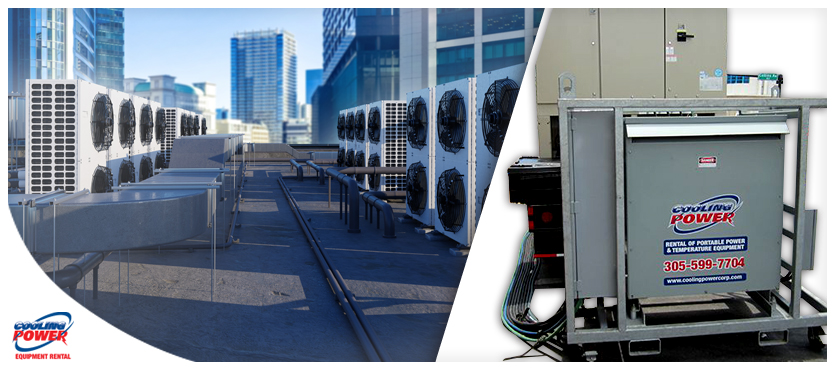
Facility expansion projects create exciting opportunities for businesses to increase production, add new capabilities, and accommodate future growth. However, expanding an industrial or commercial facility can also create temporary challenges for existing operations. Electrical systems may need to be modified, HVAC equipment may be taken offline, and construction activities can affect temperature, airflow, and indoor air quality throughout the building.
Temporary equipment rentals provide a practical way to bridge these gaps. Generators, cooling equipment, air handlers, and air filtration systems can support critical operations while permanent infrastructure is being installed or upgraded. With proper planning, businesses can continue operating throughout many phases of an expansion while minimizing unnecessary disruption.
Keeping Operations Running During Construction
Many facility expansions take place while the existing business remains operational. Completely shutting down a manufacturing plant, warehouse, distribution center, or commercial facility for an extended construction project may not be practical.
Temporary equipment allows businesses to maintain essential functions while contractors work on permanent systems. If electrical service must be interrupted, temporary power can support critical equipment and work areas. If sections of the HVAC system are unavailable, temporary cooling can help maintain acceptable conditions in occupied or operational spaces.
This flexibility can help businesses maintain production schedules, serve customers, and continue normal activities throughout the expansion.
Providing Power Before Permanent Infrastructure Is Ready
New sections of a facility may require electricity long before permanent electrical infrastructure is completed. Construction crews need power for tools, lighting, equipment, and temporary offices, while newly installed systems may need electricity for testing and commissioning.
Temporary generators can provide power during these transitional stages. Power distribution equipment can then help deliver electricity to different areas of the project as requirements change.
Temporary power can also provide additional protection when existing electrical infrastructure must be disconnected or modified. Instead of leaving critical operations without electricity, facilities can establish an alternative power source until permanent service is restored.
Maintaining Climate Control During HVAC Upgrades
Facility expansions frequently involve changes to existing HVAC systems. Ductwork may need to be rerouted, cooling equipment may be replaced, or additional capacity may be installed to accommodate the expanded building.
During these projects, permanent climate control may be limited in certain areas. Temporary chillers, portable air conditioners, spot coolers, and air handlers can provide supplemental capacity while HVAC work is underway.
Maintaining appropriate temperatures is particularly important in facilities containing sensitive equipment, stored products, electronics, or heat-generating machinery. Temporary cooling can also help maintain more comfortable conditions for employees working near construction areas.
Managing Dust and Airborne Contaminants
Expansion projects can generate significant amounts of dust and debris. Cutting, drilling, demolition, drywall work, and other construction activities can release particles that migrate beyond the immediate work zone.
Portable air filtration equipment can help control airborne contaminants during these phases of the project. HEPA filtration and negative air equipment can be used to improve air quality and help prevent construction dust from spreading into occupied or sensitive areas.
This can be particularly important when expansion work occurs near production lines, offices, healthcare environments, electronics, or other spaces where excessive dust could interfere with normal operations.
Adapting as the Expansion Progresses
One of the primary advantages of rental equipment is flexibility. The needs of a facility expansion can change significantly from one phase to the next. Early construction may require temporary power for tools and lighting, while later phases may require additional cooling or air filtration.
Rental equipment can be added, relocated, or removed as those requirements change. Businesses are not forced to purchase equipment that may only be necessary for a particular stage of construction.
This scalability can be especially valuable for large projects where different sections of the facility are completed at different times.
Supporting Testing and Commissioning
Before new facility systems become fully operational, they often need to be tested under realistic conditions. Electrical equipment, HVAC components, production machinery, and other infrastructure may require temporary support during startup and commissioning.
Rental equipment can provide additional power or cooling capacity during these procedures. This gives project teams greater flexibility while new systems are evaluated and helps prevent existing operations from being unnecessarily affected during testing.
Once permanent infrastructure has been verified and placed into service, temporary equipment can be removed.
Reducing the Risk of Project Disruptions
Even carefully planned expansions can encounter unexpected challenges. Construction delays, equipment delivery issues, utility interruptions, and changing project requirements can all affect the original schedule.
Having access to temporary equipment provides another layer of operational flexibility. Instead of allowing an unexpected infrastructure issue to halt work or disrupt existing operations, facility managers can use rental solutions to address short-term needs while a permanent solution is completed.
Planning for these possibilities early can help businesses respond more quickly and keep both construction and daily operations moving forward.
Supporting Growth Without Unnecessary Disruption
Facility expansion projects should position a business for future growth without creating avoidable problems for current operations. Temporary power, cooling, and air filtration equipment can provide the support needed to maintain critical systems throughout construction, infrastructure upgrades, and commissioning.
Cooling Power Corp provides temporary equipment solutions for industrial and commercial facilities undergoing expansions, renovations, and infrastructure improvements. To discuss the power, cooling, or air quality requirements of an upcoming facility project, contact Cooling Power Corp.