
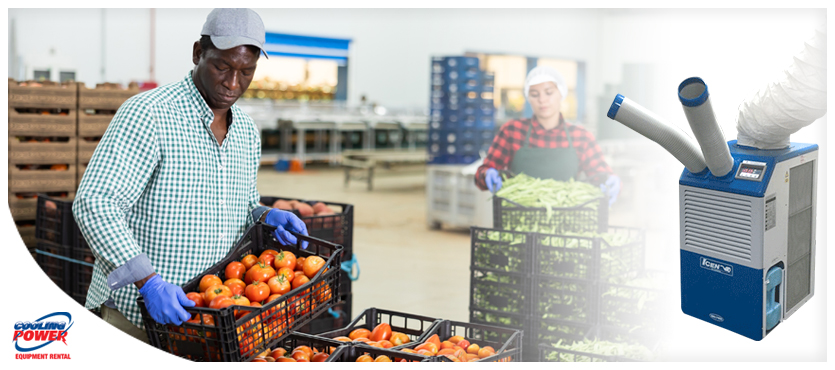
Temperature-sensitive inventory requires consistent environmental conditions from the moment it enters a facility until it leaves. Food products, pharmaceuticals, electronics, chemicals, specialty materials, and other sensitive goods can all be affected by excessive heat or unexpected temperature fluctuations. When a permanent cooling system fails or struggles to keep up with demand, businesses may have a limited amount of time to protect valuable inventory.
Temporary cooling provides a flexible way to maintain appropriate conditions during HVAC failures, maintenance, seasonal temperature spikes, and other disruptions. Having access to supplemental cooling can help facilities reduce product losses, maintain quality, and continue operating while the primary system is restored.
Why Temperature Stability Matters
Different products respond to heat in different ways, but many types of inventory depend on relatively stable storage conditions. Food products may experience accelerated spoilage, while certain pharmaceuticals and chemicals can lose stability when exposed to temperatures outside their recommended ranges. Electronics and other sensitive components can also be affected by excessive heat and humidity.
Even when inventory does not become unusable immediately, repeated temperature fluctuations can affect quality and shorten its usable life. Maintaining consistent conditions is therefore an important part of protecting both the products themselves and the investment they represent.
Cooling System Failures Can Become Costly Quickly
A cooling system failure can become a serious problem in a warehouse or storage facility, particularly during hot weather. Once the HVAC or refrigeration support system stops operating properly, indoor temperatures may begin rising quickly.
Facilities with large inventories face particularly significant financial exposure. Losing a room, warehouse section, or shipment of temperature-sensitive products can cost far more than the repair that caused the interruption.
The consequences can extend beyond inventory replacement. Businesses may experience delayed shipments, production interruptions, customer complaints, and additional labor expenses associated with moving or replacing affected products.
Temporary Cooling Provides Rapid Support
Temporary cooling equipment can provide additional capacity while a permanent system is being repaired. Depending on the facility and its requirements, portable air conditioners, spot coolers, air handlers, or larger temporary cooling systems can be deployed to maintain conditions in affected areas.
Instead of relocating an entire inventory, businesses can bring cooling equipment directly to the space where it is needed. This can be particularly valuable when a failure affects only one section of a larger facility.
Temporary systems can also support the existing HVAC system when it is still operating but cannot maintain the required temperature. Supplemental cooling reduces the load on permanent equipment and provides additional capacity during demanding conditions.
Managing Seasonal Peaks and Increased Inventory
Cooling challenges are not always caused by equipment failures. Warehouses and distribution centers may experience seasonal increases in inventory that change the cooling requirements of the facility. Increased activity, additional employees, frequent loading dock use, and longer operating hours can all contribute to higher indoor temperatures.
Extreme summer weather can place even more pressure on permanent cooling equipment. A system designed around typical conditions may struggle when outdoor temperatures and operational demands reach their seasonal peaks.
Temporary cooling gives facility managers the ability to increase capacity when needed without installing permanent equipment solely to accommodate a relatively short period of increased demand.
Protecting Specific Areas With Targeted Cooling
Not every part of a facility requires the same level of climate control. Some storage zones may contain particularly sensitive inventory, while other areas can tolerate greater temperature variation.
Portable cooling equipment makes it possible to focus resources on these critical areas. Spot cooling can provide targeted support for smaller spaces, while larger equipment can help maintain conditions across broader storage or processing areas.
This approach can improve efficiency because businesses are able to direct additional cooling toward areas where temperature stability matters most instead of attempting to increase cooling throughout an entire building.
Planning for HVAC Maintenance and Repairs
Planned HVAC maintenance can create many of the same challenges as an unexpected failure. When part of a cooling system needs to be shut down for repairs, facilities still need to protect the inventory stored inside.
Temporary cooling can be installed before scheduled work begins, allowing the transition from permanent equipment to supplemental cooling to occur with minimal disruption. Once repairs are complete, the temporary system can be removed and normal operations can resume.
Including temporary cooling in maintenance planning can help facilities avoid unnecessary product movement and reduce the operational complications associated with HVAC shutdowns.
Preparing Before Temperature Problems Occur
The best time to plan for a cooling emergency is before the primary system fails. Facility managers can identify temperature-sensitive areas, understand their approximate cooling requirements, and develop procedures for responding to an unexpected outage.
Having a plan also makes it easier to secure the appropriate temporary equipment quickly. During extreme heat or widespread weather events, demand for cooling equipment may increase significantly.
Protecting Inventory With Reliable Temporary Cooling
Temperature-sensitive inventory represents a substantial investment, and maintaining appropriate environmental conditions is an important part of protecting it. Temporary cooling provides businesses with additional flexibility during system failures, scheduled maintenance, seasonal demand, and other situations where permanent cooling capacity may not be enough.
Cooling Power Corp provides temporary cooling equipment for warehouses, distribution centers, industrial facilities, and other operations with critical climate control needs. When additional cooling capacity is needed to protect valuable inventory and maintain operations, contact Cooling Power Corp to discuss available rental solutions.